Latin for Gardeners: February 2019

February’s Native Maryland Plant
Fagus grandifolia Ehrh.
(FAY-gus gran-dih-FOLE-ee-uh)
Common Name: American Beech

fagus.jpg

Fagus sp. are imposing trees, slow-growing but long-lived. Their naturally long and low, horizontal branches create dense shade where no ground cover or grass is needed. The beech growing in my yard was pruned as a young tree, preventing its lower limbs from reaching cars passing by, thereby allowing me to walk beneath its lovely branches. This hardwood tree has a shallow root system that makes it susceptible to root zone disturbance and drought.  It prefers a loamy, moist, acidic soil and during colonial times its sighting was used as an indicator of fertile soil – many beech forests were cleared to make way for farming. Although it is rated as a full sun tree, Fagus grandifolia is known as one of the most shade “tolerant” northern hardwood species.  Beech nuts are a valuable food source for many mammals and its foliage is host to 125 caterpillar species¹. Rick Darke² has said of this tree, “it is worth watching year-round just for the pageantry of its foliage.”

fagus+2.jpg

Fagus sp. spread by seed dispersal and root sprouts and are considerably deer resistant. Due to climate change and Fagus’ adaptability, these trees are having a resurgence and are out competing other important tree species – including in my yard. The next time you’re out walking in one of Maryland’s forests, look for Fagus grandifolia; its distinct bark and buds will help you identify it. With spring just around the corner, I encourage you to ‘think big’ and consider planting a large shade tree.  Shade trees improve air quality and help cool the planet, including the stormwater runoff that is flowing to our rivers and the Bay.

1 Doug Tallamy, Living Landscapes

2 Author – The American Woodland Garden

NOTE: Visit the HoCo State Champion Fagus grandifolia at HCCC. http://www.mdbigtrees.com/view_tree.aspx

~ Alison Milligan – MG/MN 2013
Master Watershed Steward Class 7
aligmilligan@gmail.com

Latin for Gardeners: Test Your Knowledge

December’s Native Maryland Plant: All of them!

Hello Master Gardeners and Watershed Stewards!

Winter is finally here, it’s time to take a rest from gardening, to enjoy the magic of the season and the holidays ahead. It’s also time for the end-of-year, just for fun quiz. The quiz is meant to help you visually recognize the plants featured this year, in their fall or winter dress, and to test your knowledge of their scientific names.

It’s always best to use the Latin name of plants when you recommend them to friends and the public – there’s only one Latin name for a plant so it avoids confusion and ensures people select the right plant when shopping at nurseries. The photos below were all taken in November or December, can you still recognize the plants?  I’ve also shown them in bloom to remind you of their beauty and value throughout the year. Don’t feel bad if you can’t match them all – Latin is not an easy language.  Good luck, or as they say in Latin, “Fortuna!”

Match the letter of each plant to the number of its blooming counterpart below.

QuizBloomingWSA2018.jpg

Alison Milligan ~ MG Class of 2013
Mstr. Gardener / Mstr. Naturalist / Mstr. Watershed Steward
Chesapeake Bay Landscape Professional (CBLP)
aligmilligan@gmail.com

Celebrating Our History

DSC03030.jpg

10 years ago, THIS WEEK, WSA was born. In case you don’t know the full story, here it is… 

               In 2003,  Arlington Echo Outdoor Education Center began to partner with the Anne Arundel  County Department of Public Works (DPW) to install ecosystem restoration projects to address stormwater issues. These innovative solutions represented a paradigm shift away from “collect and convey” toward mimicking nature to clean, cool and infiltrate stormwater. As school children and their parents toured these sites, planted native plants and learned about stormwater, they began to understand their role in Bay restoration.  Communities began to ask what more they could do to help restore their creek, river or the Bay.  As Arlington Echo and DPW staff began to work with these communities, they quickly understood that they were outnumbered by people wanting to take action. Each of these communities needed someone to work with them, but there were not enough staff resources at either Arlington Echo or DPW to capitalize on all of the enthusiasm. 

               In 2005, Ron Bowen and Ginger Ellis of DPW began meeting with Stephen Barry and Suzanne Etgen of Arlington Echo to brainstorm ways to turn this growing awareness into action.  Over the next 2 years, and 100s of hours, the Watershed Stewards Academy concept was born.  After pitching the idea to David O’Neil (then of Chesapeake Bay Trust) and Verna Harrison (then of Keith Campbell Foundation), DPW secured three years of funding for program development.  Soon Carrie Decker of the MD Department of Natural Resources approached DPW about funding WSA with a small pot of NOAA Coastal Communities money. In December 2008, a staff person, Suzanne Etgen, was dedicated to work with the program and WSA was born. 

10 years ago this week WSA was born. On December 8, 2008, the WSA founders (Ron Bowen, Ginger Ellis, Stephen Barry and Suzanne Etgen) invited about 40 partners consisting of RiverKeepers, landscape architects, local government leaders and environmental advocates, to help in the formation of key aspects of the program:  Curriculum, Tool Box for Sustaining Action and Consortium of Support Professionals. A kickoff meeting was held in the Great Room at Arlington Echo, committees were established and less than 3 months later, WSA began training our first class of 32 Master Watershed Stewards.    

In spring of 2010, the Chesapeake Bay Program, impressed by the power of citizen stewards engaged through WSA, wrote the replication of WSA into their strategy to address President Obama’s Executive Order for Bay Restoration.  WSA formed a strategic partnership with the University of Maryland Seagrant Extension, to help propagate WSAs. There are now established WSA programs in the National Capital Region (Montgomery and Prince Georges County and DC), Howard, Harford, St. Mary’s and Cecil Counties.  Additionally, WSA has been replicated in Pennsylvania, upstate New York, and Minnesota.


Mission

Our Vision…  Every community in Anne Arundel County is actively engaged to ensure clean waters.

Our Mission… To develop citizen leaders to foster community change for clean waters.

Remembering Dick Lahn

Dick.jpg

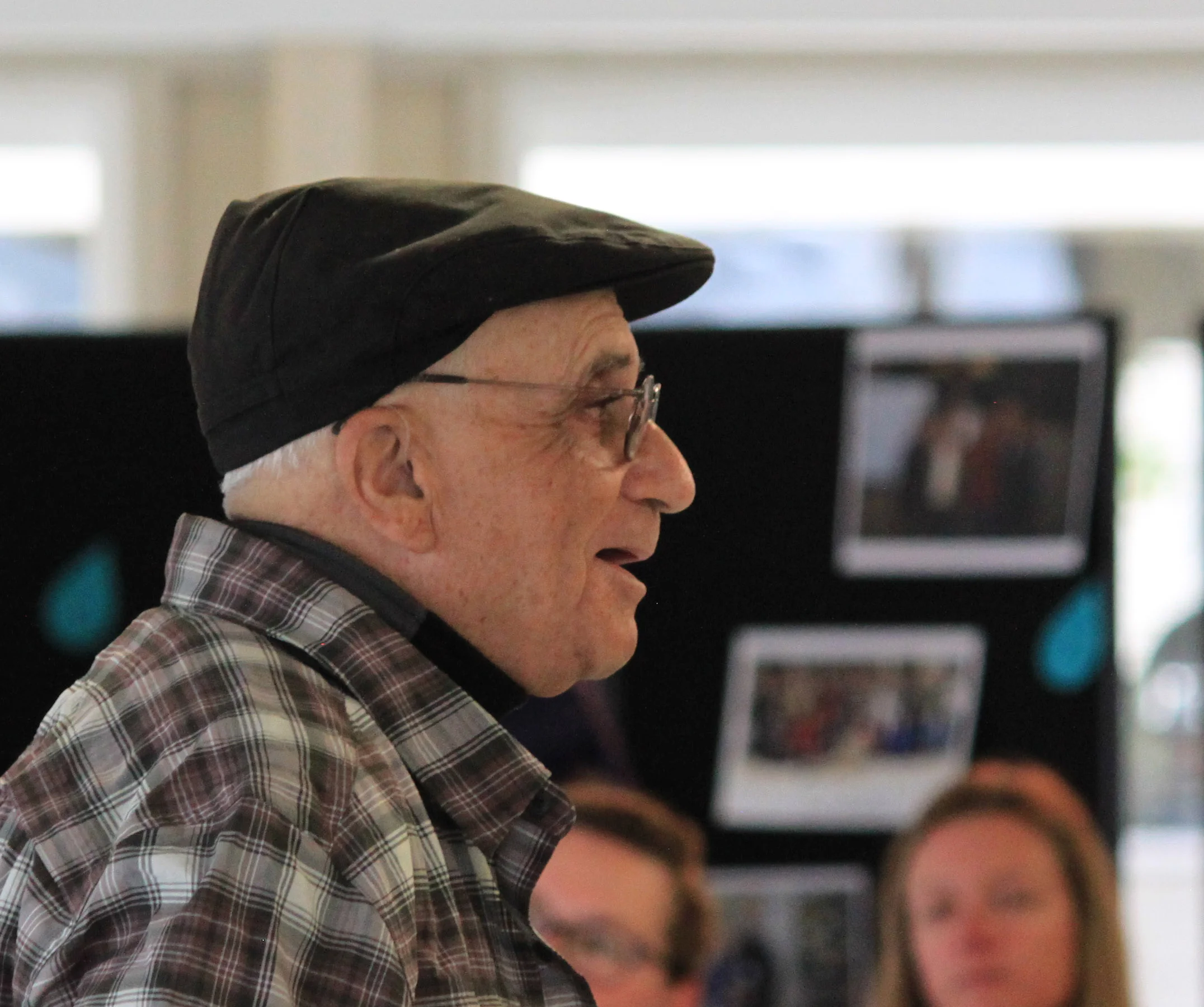
Along with most of the environmental community, we are saddened at the passing of Dick “Ivy” Lahn, WSA Consortium Member, founder of String of Pearls and extraordinary environmental advocate. 

I first met Dick when he was organizing stormwater project in Crofton in 2006. Dick, along with his sidekick, Ann Pearson, was trying to demonstrate how people in Crofton could very easily intercept water from their own roofs and driveways and keep it from getting into nearby streams. We sat together for several hours in front of a computer making maps of the Crofton area and its watersheds to be posted at the local library.  

Over a decade later, Dick remembered that day, and remarked on it just a few months ago at WSA’s 10th anniversary celebration at Mayo Beach Park. This was so characteristic of Dick  -  to recognize and thank others for their role in HIS work. Rather than take credit, Dick was always looking for ways to build others up; to acknowledge with gratitude the efforts of others.

IMG_1239i.jpg

There are many kinds of leaders in the environmental movement. Dick was not a “take charge” leader or one to relish the spotlight. Instead, Dick led with humility, focusing on a vision of people working together to make change. His way was to exuded so much love and gratitude toward people doing good things that we just could not help but do more of those good things.   

A great example of his gratitude-centered leadership is his String of Pearls project. If you are not familiar with it, check it out.

Personally, I am so grateful to have had Dick as a mentor and friend. My life and WSA’s path has been altered by his gentle spirit and his passion for positive change. Today, I remember Dick and am reminded to consider his “gratitude-centered” leadership as I move into the holiday season. Thank you Dick, for all you have given. We will miss you. 

Suzanne Etgen

Master Watershed Steward Amy Clements with Dick Lahn at WSA’s 10th Anniversary Kickoff Celebration

Master Watershed Steward Amy Clements with Dick Lahn at WSA’s 10th Anniversary Kickoff Celebration