Berrywood Updates: November 2018

The Berrywood Community Association (BCA) is a homeowners association located in Severna Park. The BCA’s property is transected by a section of Cattail Creek, a principal tributary of the Magothy River. BCA is partnering with the Watershed Stewards Academy, the Chesapeake Bay Trust and Maryland DNR to implement a stream restoration and living shoreline project as well as stormwater BMP’s to address erosion issues and to improve the water quality of Cattail Creek.

The Berrywood project consists of:

  • A regenerative stormwater conveyance system. This system raises the stream bed and uses weirs to slow and widen the stream flow, increase floodplain connectivity, and reduce erosion.

  • Replacement of the bulkhead along the marina and replacement with a living shoreline.

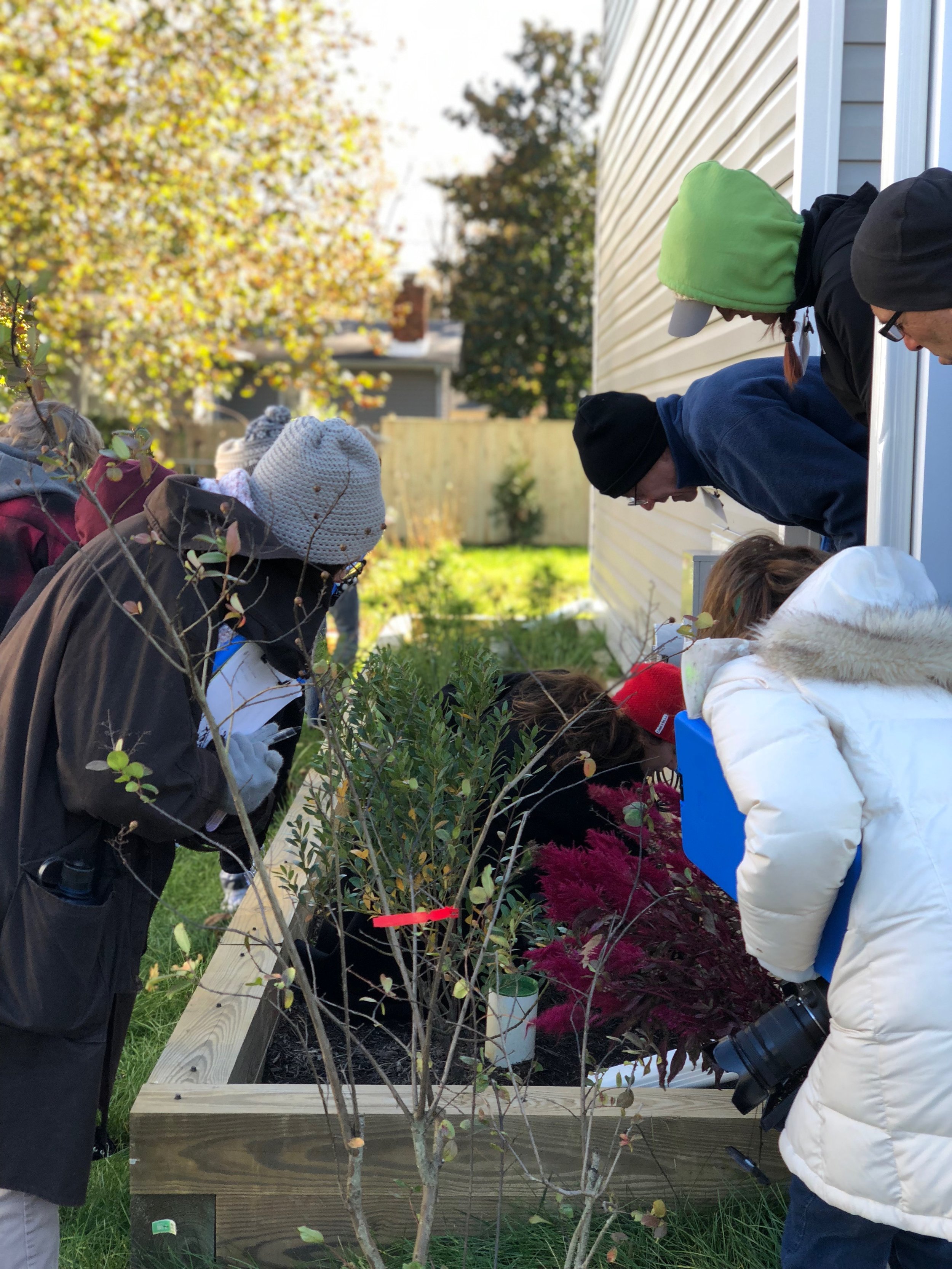
  • Installation of additional rain gardens to capture and treat runoff from the access road, parking lot and basketball court.

Cattail Creek is a spawning ground for Yellow Perch. All in-stream construction will be completed before spawning season begins (February 15).

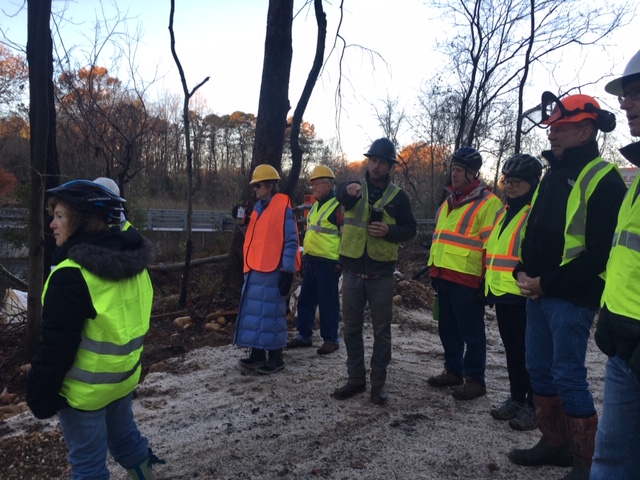
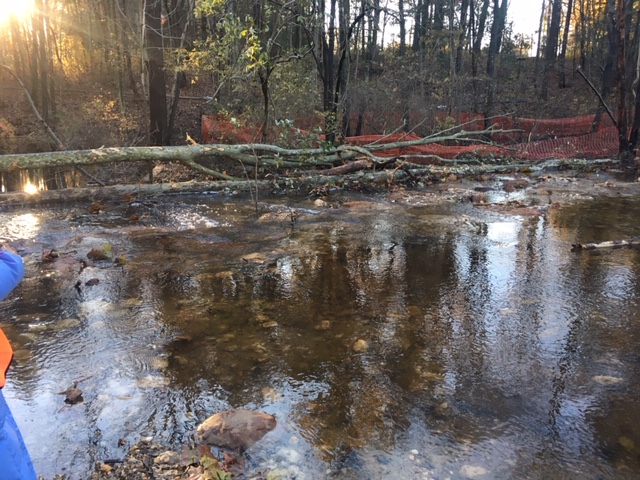
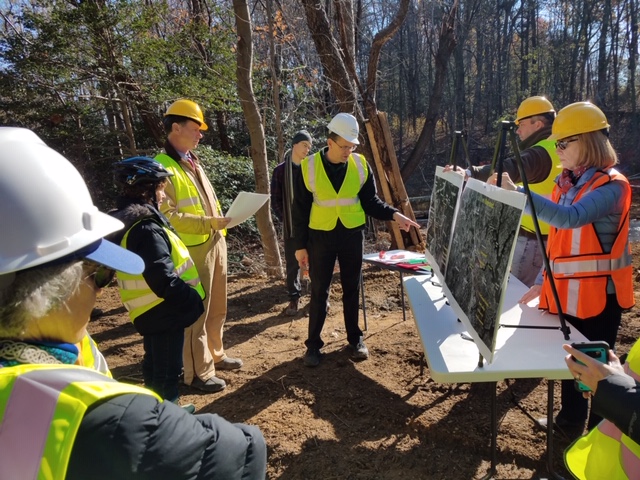
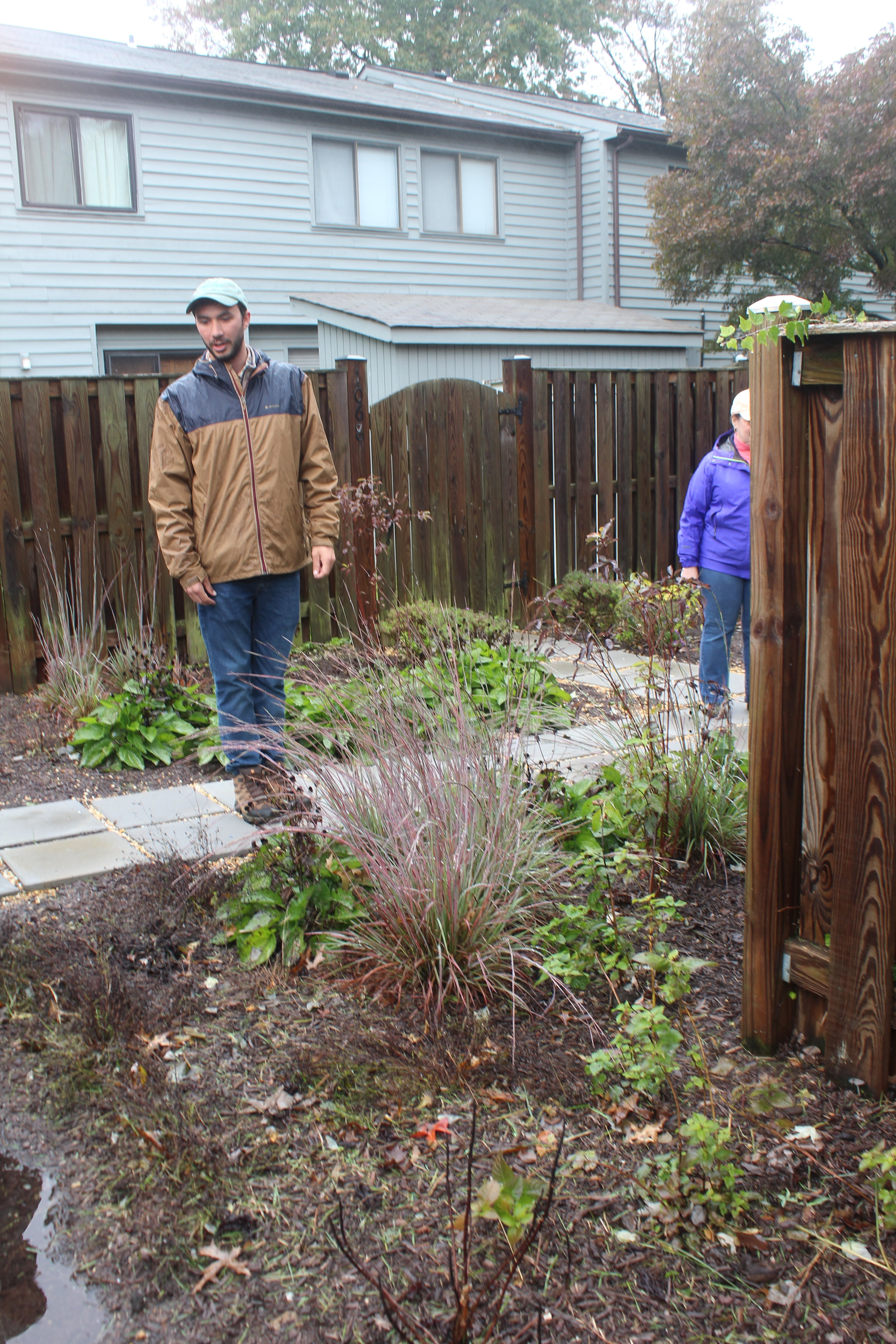
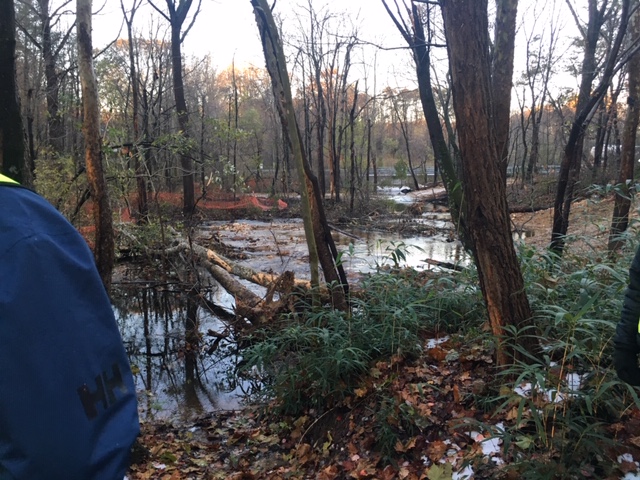
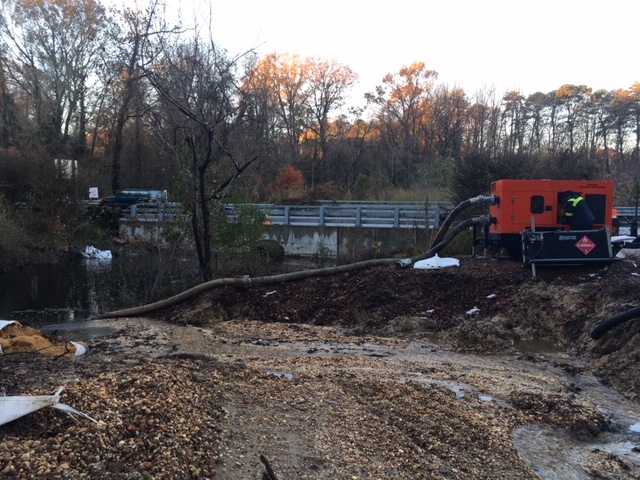
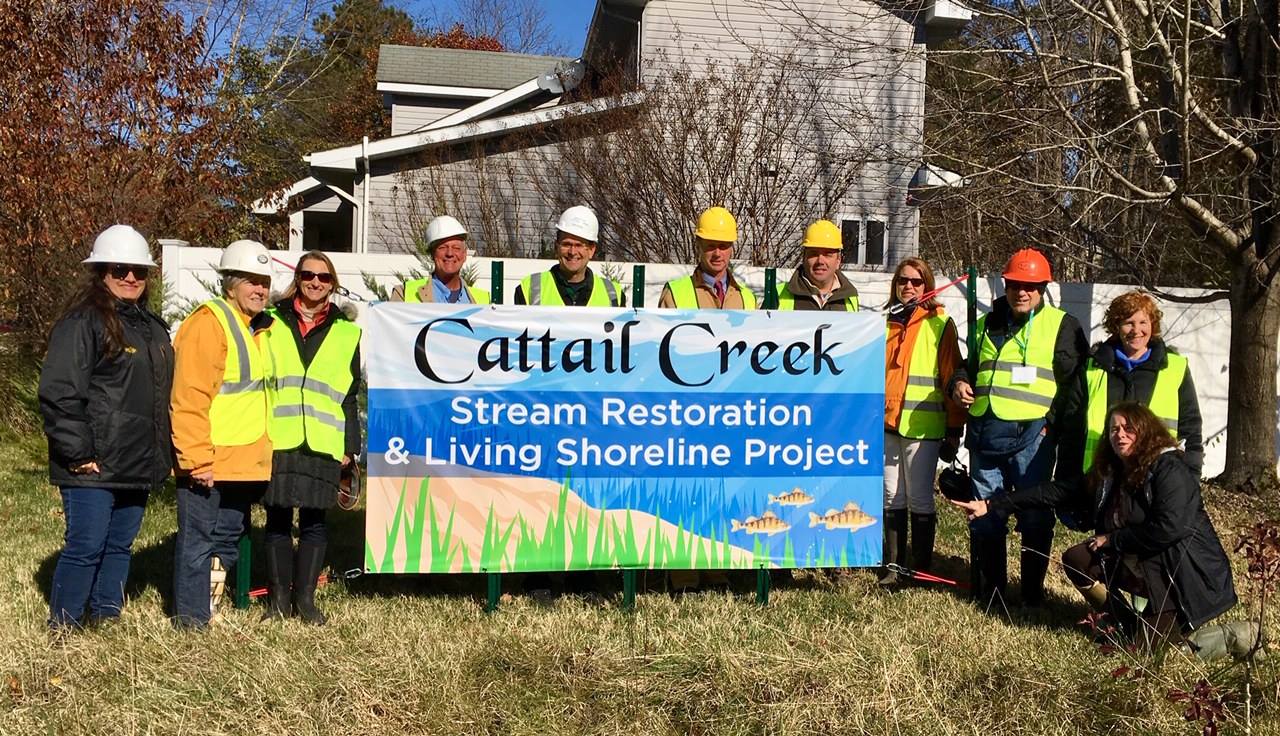
As of November 2018, the Berrywood stream restoration and living shoreline is well underway. All but two weirs have been built in the stream portion of the project and the living shoreline is being finished this week. There is still much more work and several other bioretention components to this project that need to be built. The below photos are of a recent Community Construction Progress Meeting after a 1.5" storm. The pump which handles base flow is at the top of the project. We can see how the newly restored stream reconnects the stream to the surrounding flood plain. It is functioning splendidly!
Berrywood Welcomes Steuart Pittman

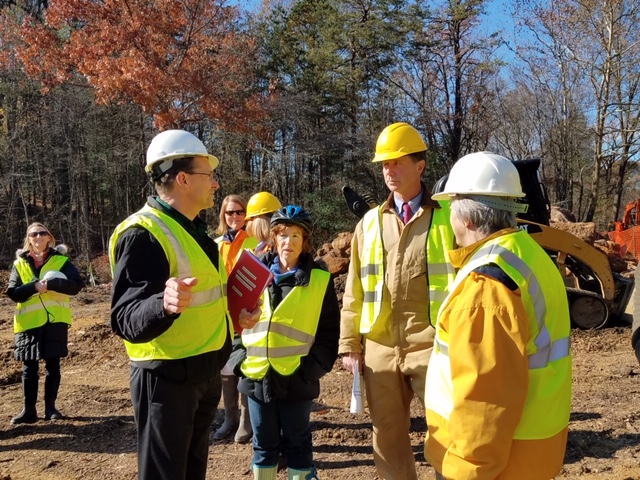
On Wednesday, November 21st, County Executive Elect Steuart Pittman visited the Berrywood community to see the Cattail Creek stream restoration and living shoreline project. This project is possible through the support of the county, the Department of National Resources, the Chesapeake Bay Trust, the Anne Arundel Watershed Stewards Academy, and the work of members of the Berrywood Community and its Association. 

Community members emphasized the importance of this project on improving water quality in the Magothy. They pointed to plans for future development upstream that could negatively impact this watershed and encouraged the County Executive Elect to keep water quality as an important goal in pursuing development. 
Latin for Gardeners: November 2018

November’s Native Maryland Plant
Juniperus virginiana L. (joo-NIP-ur-us vur-jin-ee-AY-nuh)
Common Name: Eastern Redcedar

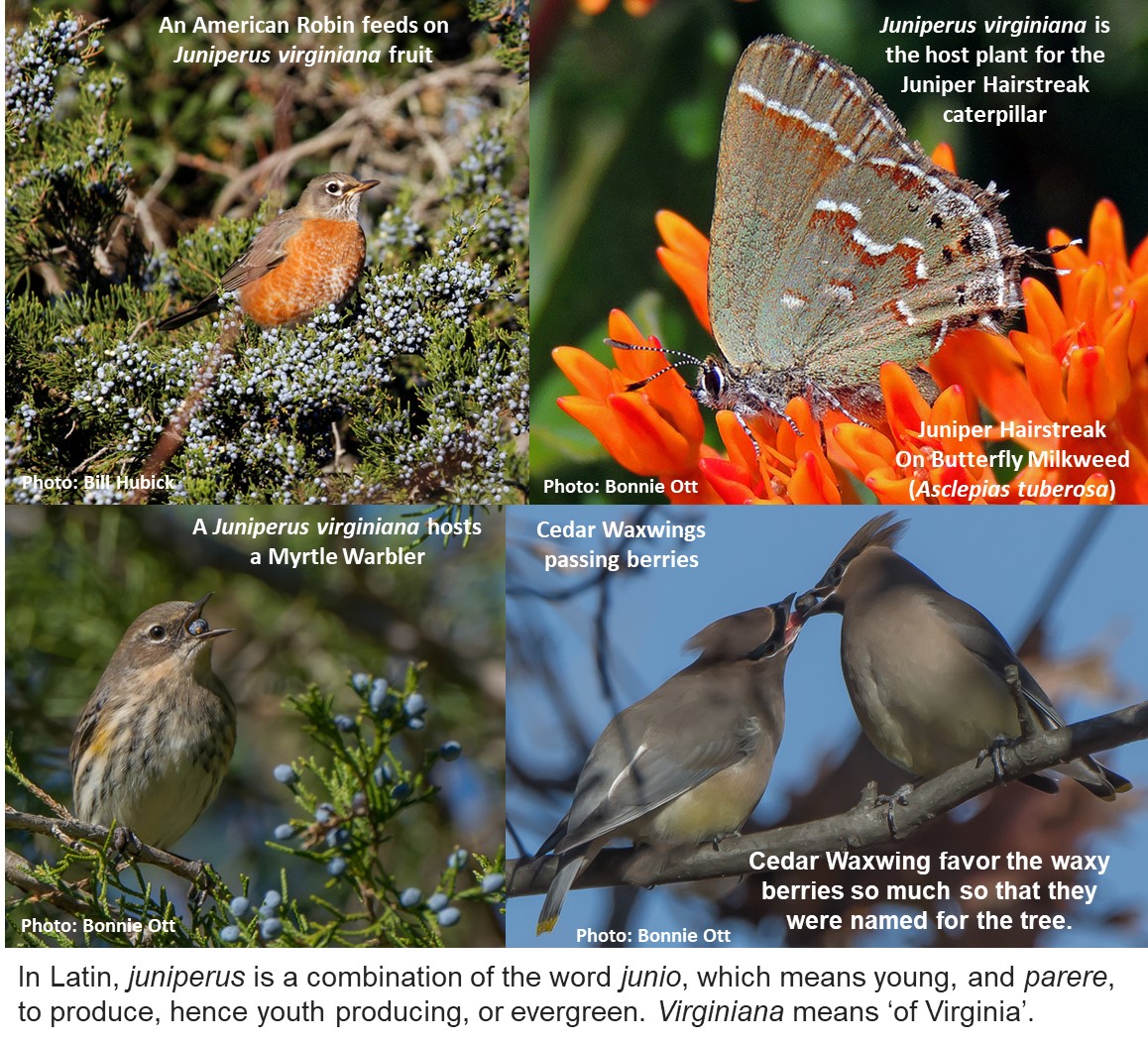
Juniperus_Main.jpg

The 2018 Latin for Gardeners year began with the White Oak (Quercus alba), a majestic tree with a considerably long lifespan, and according to Doug Tallamy¹, one of the most beneficial trees for birds and other wildlife. I would like to close out the year highlighting another tree, this one an often-overlooked but ubiquitous evergreen - Juniperus virginiana, a member of the Cypress (Cupressaceae) family.  Likely never to be called majestic, Eastern Redcedar’s waxy berries are consumed by over 50 species of birds and many mammals, including rabbit, fox, raccoon and coyote; its dense branches provide cover for these animals year-round.  The needle-leaves of junipers are stiff and sharp and the juvenile foliage is very prickly. This is a helpful identification feature in Juniperus spp. saplings, as the otherwise very similar juvenile foliage of cypresses is soft.

Juniperus_Misc.jpg

Juniperus virginiana is a pioneer² species that thrives in dry, sunny sites and can withstand extremes of drought, heat and cold; based on recent climate predictions you are likely to see more of this tree. The oldest known specimen of Juniperus virginiana was found in Virginia, it was 940 years old – more than twice as old as the Wye oak!

Interestingly, Juniperus virginiana’s common name, Eastern Redcedar is a misnomer; it is not a true cedar (Cedrus). The lack of space between the words "red" and "cedar" indicates this. This means that the heirloom cedar chest, (lined with Redcedar planks), where my grandmother kept spare blankets and linens is really a juniper chest!

NOTE: You may be aware of cedar apple rust fungus that infects Juniperus virginiana - it is rarely fatal.  However, this fungus is very damaging to apple trees so planting these two trees in close proximity should be avoided.

~ Alison Milligan – MG/MN 2013
Master Watershed Steward Class 7
aligmilligan@gmail.com

1 University of Delaware, Professor of Entomology

2 one of the first trees to repopulate cleared, eroded, or otherwise damaged land. It is unusually long lived among pioneer species, with the potential to live over 900 years.

Welcome to WSA, Class 11!

IMG_1410x.jpg

WSA’s 11th Master Watershed Steward Certification Course began on Saturday, October 27th. The 30 Steward Candidates of Class 11, representing 7 watersheds in Anne Arundel County, have made it through the most meeting-intensive period of the course, covering 3 Sessions in just two weeks!  Go Class 11!

Here’s a breakdown of what they covered in their first 3 Sessions:

Session 1: Stormwater Tour of Annapolis

Main Location: St. Luke’s / Time: 9 AM - 4 PM

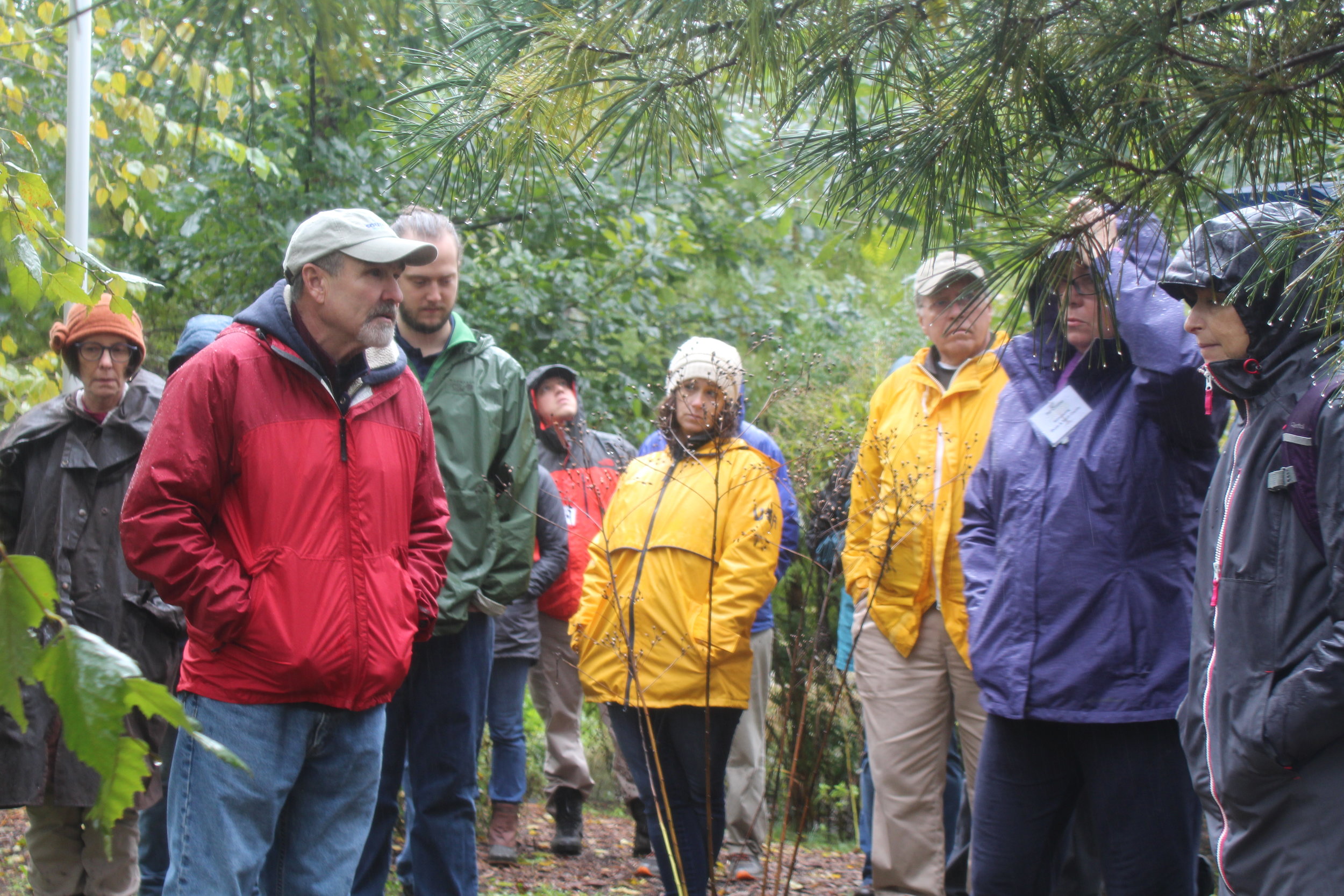
Class 11’s first session was held at St. Luke’s Restoration of Nature in Eastport.  Steward Candidates got to see the magic happen on a rainy Saturday, as they visited 5 sites in Annapolis:

  • Near the Timber Creek neighborhood, they saw a badly degraded stream;

  • At Mt. Olive AME, they saw RiverWise congregations projects, including Conservation Landscapes, Rain Gardens, and Pervious Pavers;

  • At the neighborhood of Cedar Ridge, they saw several newly installed projects from Spring 2018, including a Pollinator Garden, a Green Alley, and a Bioretention Area;

  • In the neighborhood of Hillsmere, they saw Community Rain Gardens and Bioretention Practices;

  • At St. Luke’s they walked the Restoration of Nature and learned about the congregation’s Regenerative Stormwater Conveyance.  

The cold and the rain didn’t dampen any spirits! Instead, all the water that day was a tremendous gift, since it meant that Class 11 got to see projects in action, doing exactly what they’re designed to do! Along the way, Class 11 connected with many Master Watershed Stewards, including Betsy Love, Elvia Thompson, Jack Turner, Jan Atwood, Kevin Green, and Rick Kissel. In the afternoon, Stewards got to hear presentations by Erik Michelson (Watershed Protection and Restoration Program) and Jackie Guild (City of Annapolis). The day ended with Environmental Literacy Stewards connecting with WSA Environmetnal Literacy Consultant and Class 10 Master Watershed Steward Bob Keddell, and South County Stewards connecting with Class 1 Master Watershed Steward Kevin Green.

IMG_1399.JPG

A Steward’s response to Session 1: “WSA has wildly exceeded my expectations! I learned a TON of great, useful information from Saturday’s class. I think you guys have done a wonderful job putting this program together and I’m super excited for what’s to come.”

Session 2: GIS / Capstone Project Overview

Location: Arlington Echo / Time: 6 PM - 9 PM

The Class 11 Stewards divided into two groups and rotated through presentations on GIS and the Capstone Project process.  While one group learned how to use GIS with Master Watershed Steward Lara Mulvaney and WSA’s Restoration Coordinator Zoe Clarkwest, the other group received an overview of the capstone project process for Rainscaping and Environmental Literacy Tracks in an interactive presentation featuring Suzanne Etgen and Class 10 Environmental Literacy Steward Denise Peach.  At the end of the evening, Noelle Chao, WSA’s Program Coordinator, showed the Class 11 Stewards how to access their personal Google Drive Folders for the course. These folders are replacing Basecamp, and will be a powerful tool going forward for documenting and preserving a Master Watershed Steward’s outreach and action on behalf of WSA.

Session 3: Neighborhood Source Assessment / Residential Site Assessment

Location: Glen Isle, a 2018-19 Clean Water Community / Time: 10 AM - 6:30 PM

For their second field session--and third class in two weeks!--our intrepid Class 11 Stewards met in the Riva community of Glen Isle on the South River to learn about two kinds of site assessments: Neighborhood Site Assessments (NSAs) and Residential Site Assessments (RSAs.)  

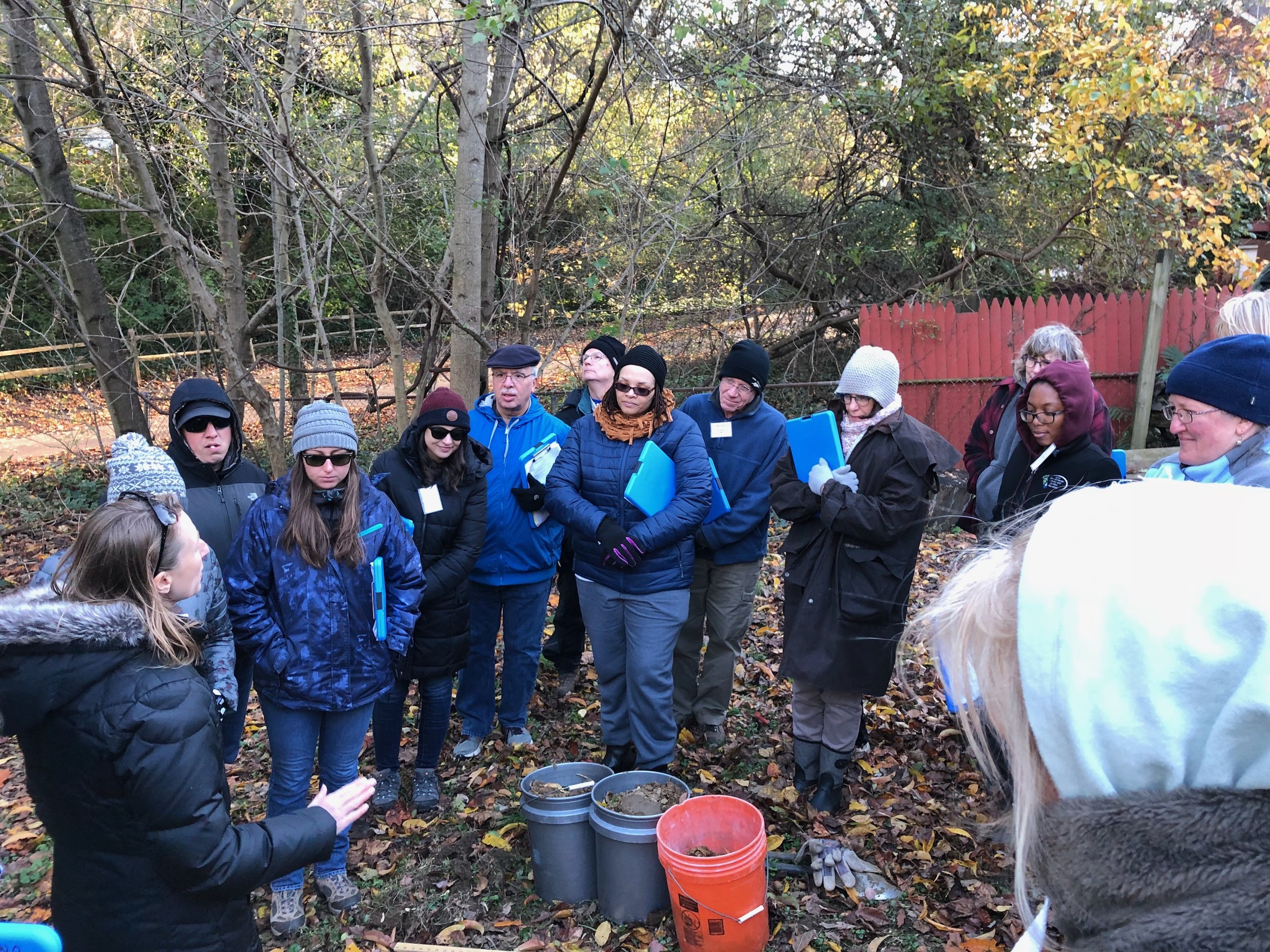
After Suzanne delivered a presentation highlighting the ins and outs of the NSA, Class 11 Stewards split into two groups and walked small portions of Glen Isle’s neighborhood, in order to determine pollution sources.  Then, they discussed possible behavior changes and rainscaping practices that residents could adopt going forward. After a yummy lunch--sandwiches from Giolitti’s in Annapolis and homemade soups by Suzanne--students went back out in the field to learn how to perform a residential site assessment.  They also learned about soils, perc tests, and Miss Utility. Class 11 braved frigid, windy conditions to perform a site assessment for their homework, and came back in from the cold to enjoy cocktail hour snacks and drinks, while listening to Bob Keddell share about some of his recent Environmental Literacy endeavors at Maryland Hall, in partnership with The Center of Help in Annapolis.  The evening ended with Stewards exploring connections, and sharing personal stories about their connections to water and the natural world.

WSA is incredibly grateful to Class 3 Master Watershed Steward and WSA Board Member Michael Wagener for hosting Class 11 in the Glen Isle Clubhouse, and sharing his experiences leading outreach in his neighborhood for WSA’s Clean Water Communities Program.

Latin for Gardeners: October 2018

October’s Native Maryland Plant
Callicarpa americana (L.) (kal-lee-KAR-pah ah-mer-ih-KAY-nah)
Common Name: American Beautyberry

Callicarpa_main.jpg

Remembering that this is the centennial of the Migratory Bird Treaty Act (MBTA)¹, you can help feed our winged-friends by planting this month’s plant:  Callicarpa americana.  This shrub has a berry that is simply hard to ignore – they are a bright, almost metallic purple and they stand out in the garden well into the wintering season.

This Coastal Plain shrub will attract pollinators in the spring and a variety of birds in late winter.  It is frequently planted in a conservation landscape because it provides both food and cover for birds.  The berries appear as clusters (cymes) and cling tightly to the sprawling woody branches.  This is a very adaptable shrub that can be pruned heavily and will recover in one season. For this reason, you can even grow it in a large pot and prune it to 6” in the spring – it flowers on new growth. Its beaded branches also make beautiful dry arrangements. Callicarpa spp. can also be planted as a vegetated buffer plant along streams and waterways – not in the water but along the stream where it will prevent erosion and add to the diversity of plants that support birds. If you’re able to visit the Howard County Conservancy this fall, you can see the unusual white variety of Callicarpa americana blooming now - Callicarpa americana var. lactea is in the lower garden to the left of the entrance. 

Callicarpa_misc.jpg

Callicarpa comes from two Greek words: callos meaning beauty and carpos, fruit – referring to its most distinguishing feature.  The specific epithet, americana, is Latin for “from the Americas”.

NOTE: You may have heard that American Beautyberry has been used as a folk remedy to prevent mosquito bites. In fact, a chemical isolated from Callicarpa spp. has been shown to act as a mosquito repellant; callicarpenal has been patented by the USDA Agriculture’s Research Service² and is used as a mosquito repellent.

~ Alison Milligan – MG/MN 2013
Master Watershed Steward Class 7
aligmilligan@gmail.com