Latin for Gardeners: January 2026

Latin for Gardeners
January’s Native Maryland Plant

Quercus palustris (Münchh.)
(KWER-kus pa-LUS-tris)
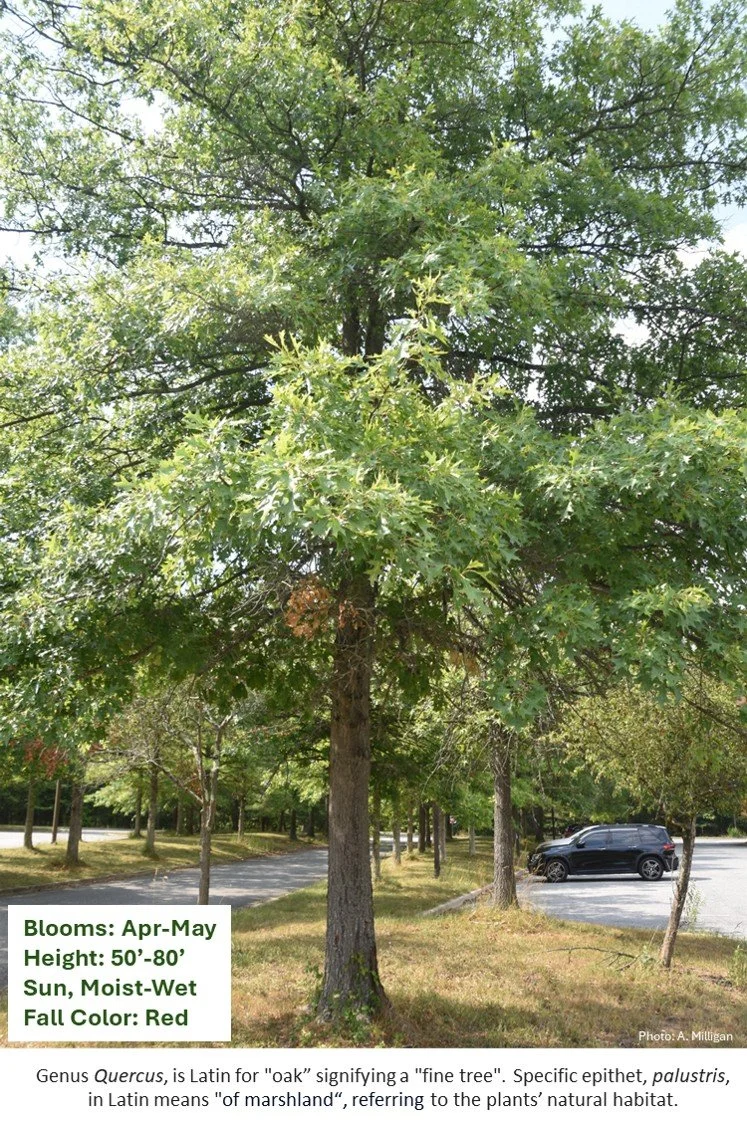
Quercus palustris are one of the very fine red oak trees that are commonly planted and easily recognized along roadways, in resident landscapes and even in parking lot islands – and for good reason. This plant is fast-growing, it tolerates urban stress, pollution and many soil conditions. Of course, being an oak it’s also a major contributor to the food web – its leaves are eaten by a vast number of insects (think very hungry caterpillar) while its acorns feed many other animals – including the very hungry squirrels in my yard.
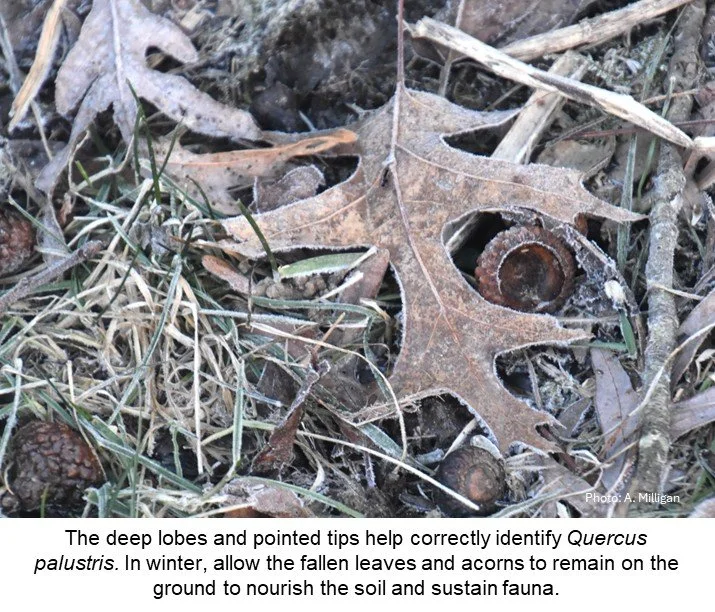
The only notable exception to the plants’ toughness is its intolerance of alkaline soil which reduces its ability to take up iron, causing iron chlorosis 1 . New growth will generally exhibit the most obvious symptoms, yellowing of the leaves, since without iron the plant can’t produce chlorophyll. The best way to avoid the condition, which can be fatal, is to not plant a Q. palustris in soil that tends towards alkaline (pH 6.5 or below is preferred). If chlorosis is observed and you can manage it, you can take advantage of another strength of this tree – it’s highly transplantable so it can withstand being moved to a more suitable acidic location.
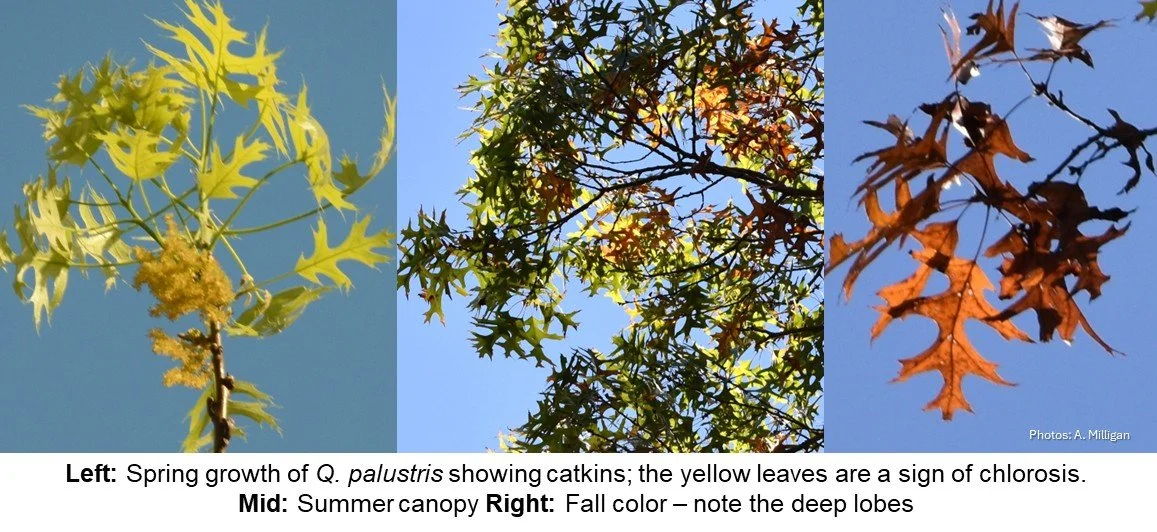
Pin oaks can be seen at the Patuxent Research Refuge in Prince George’s county Maryland. It is the only National Wildlife Refuge in the country established to support wildlife research.
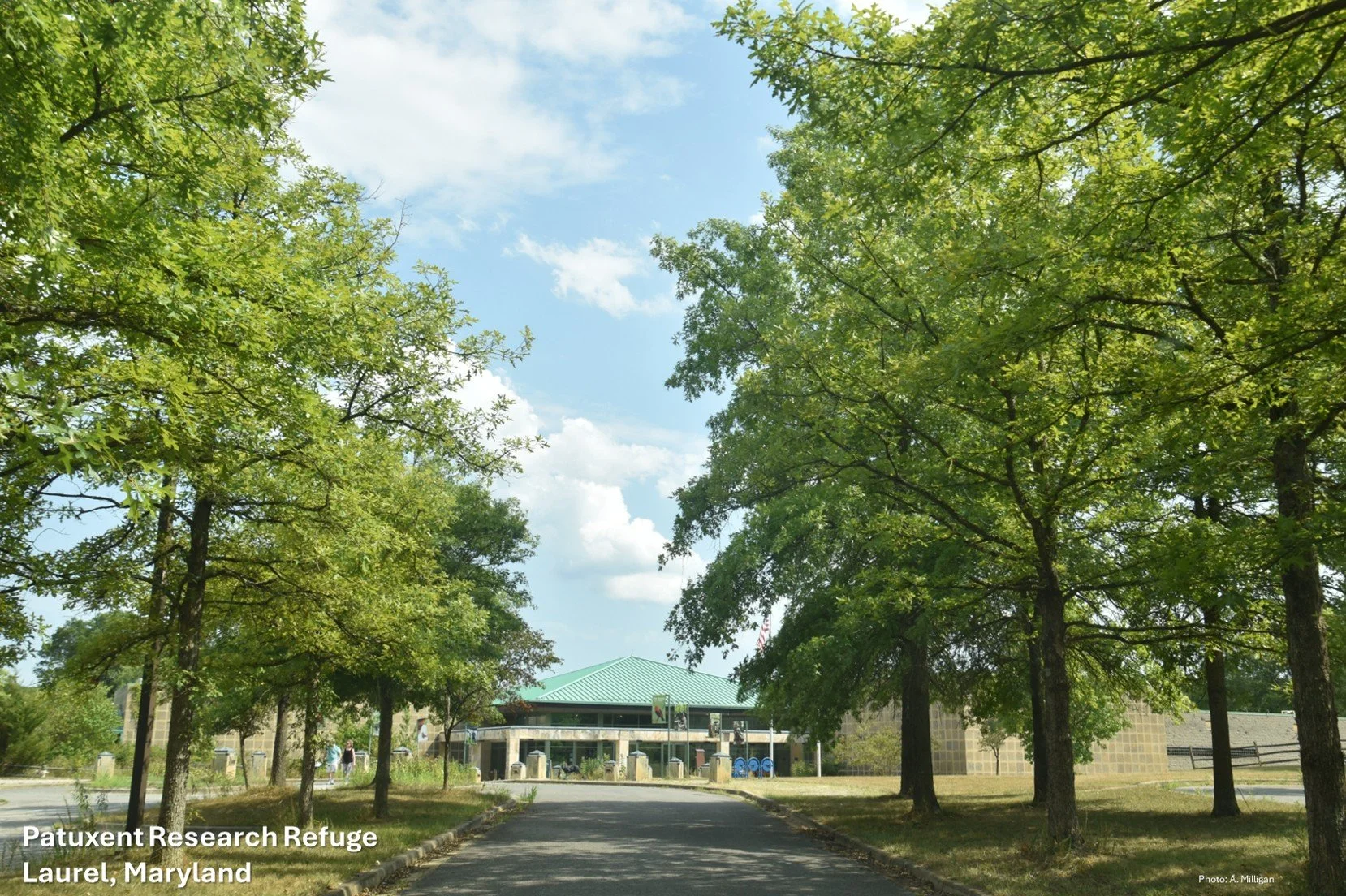
The refuge is a wonderful place to visit in the winter; there are many trails to explore and experience the wonders of the season. The Visitor Center is a destination itself, with many interesting exhibits. This month they’re featuring a photo exhibit by David Jonathan Cohen titled “In the Galápagos Islands”, a place where you’ll find unique plants and animals but no Quercus palustris.

1) Iron chlorosis is the result of a lack of iron in the new growth of a plant. Iron is not necessarily deficient in the soil—it may be there, but just in an unavailable form for absorption through the root system.

NOTE: Bur Oak (Quercus macrocarpa) is one of the oaks that is tolerant of highly alkaline soils and drought. It was featured in January 2025’s Latin for Gardeners’.

Alison Milligan – MG/MN 2013
Watershed Steward Class 7/Anne Arundel Tree Trooper
Chesapeake Bay Landscape Professional (CBLP)
alison@lifewithnativeplants.org
Giving Thanks to Stewards Everywhere

Giving Thanks to Stewards Everywhere

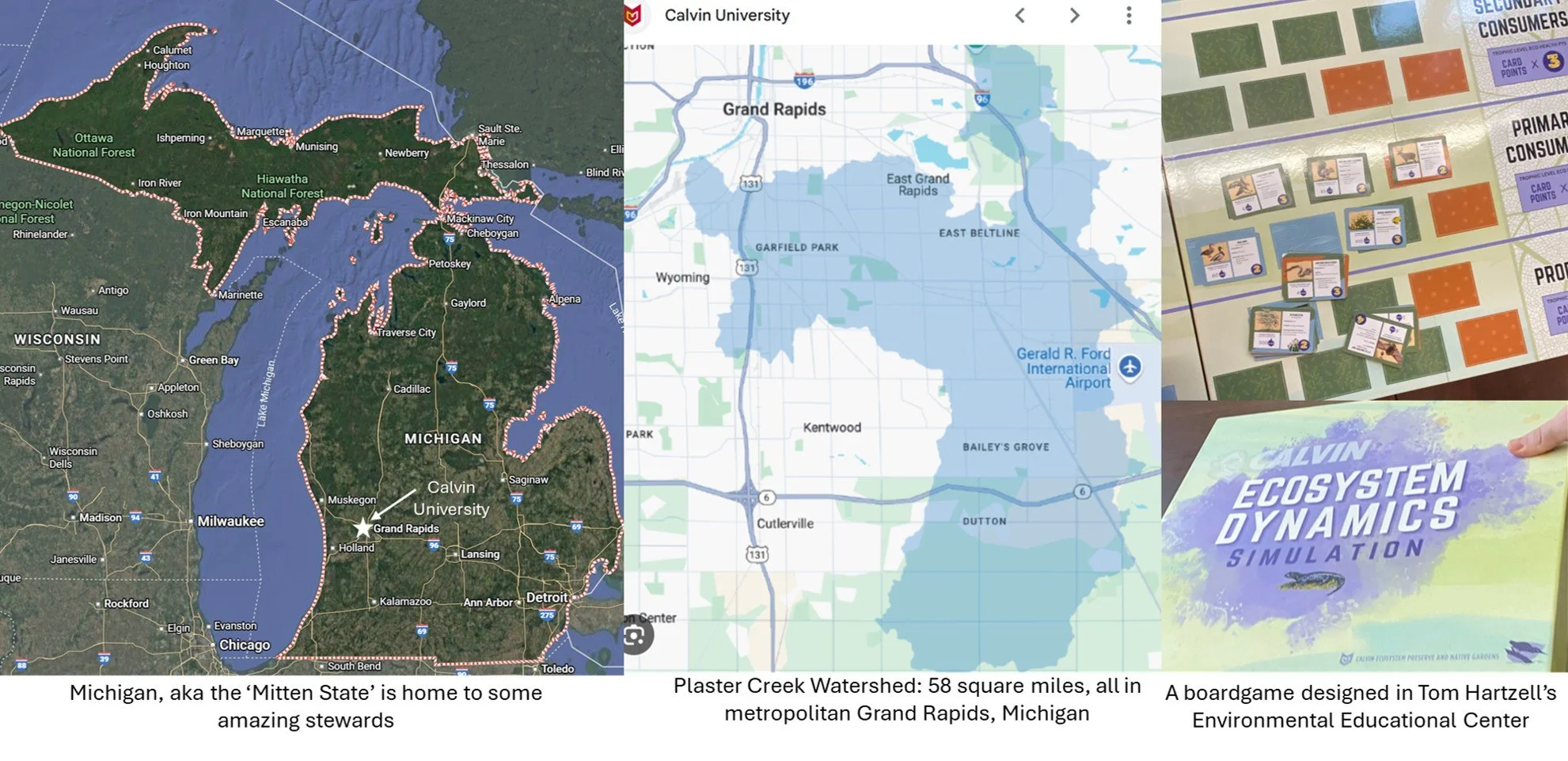
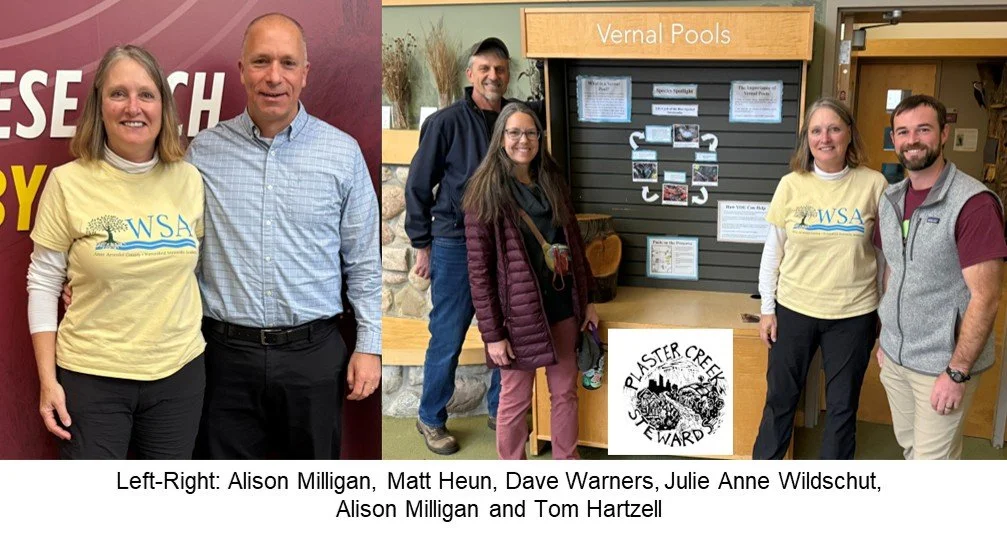
Last month I had the immense pleasure of spending time with the Grand Rapids, Michigan Calvin University Plaster Creek Stewards (PCS), a group of faith-based, service-oriented students and educators, dedicated to preserving Plaster Creek (1) , a 27-milelong creek that receives stormwater runoff from the university grounds. In meeting them, and learning about their work, I could not help but note the comparisons of the Chesapeake Bay watershed and the history and work of WSA.

I wanted to share with you the inspiring people and the impactful work they have undertaken to protect their local stream that runs through commercial, residential, agricultural and industrial areas. For context: Plaster Creek drains to the Grand River before reaching Lake Michigan, part of the Great Lakes - St. Lawrence River Basin, the single largest watershed in the world that contains 20% of the world’s supply of surface fresh water.

PCS, as they’re commonly known, formed in 2009, after a group of faculty and staff determined that Plaster Creek was in distress - its water quality was unhealthy for both human and aquatic life, there were high levels of bacteria, and frequent flooding and stormwater pollution were quickly contributing to its demise. Like Maryland rivers, non-point source pollution and agriculture were causing major decline. Also, like Maryland, Michigan is a major agricultural state, its economy relies heavily on farming.

I met with Dr. Matt Heun, an award-winning professor of Engineering and the Director of Sustainability Designation; Dr. Dave Warners, a professor of biology, a restoration ecologist and one of the founders of PCS; Julie Anne Wildschut, an assistant professor of Civil/Environmental Engineering and the project engineer for PCS, and Tom Hartzell, the Environmental Education Coordinator who offers workshops for the local community in an amazing learning space in a LEEDS building that overlooks the university’s Ecosystem Preserve (2) and Native Gardens.

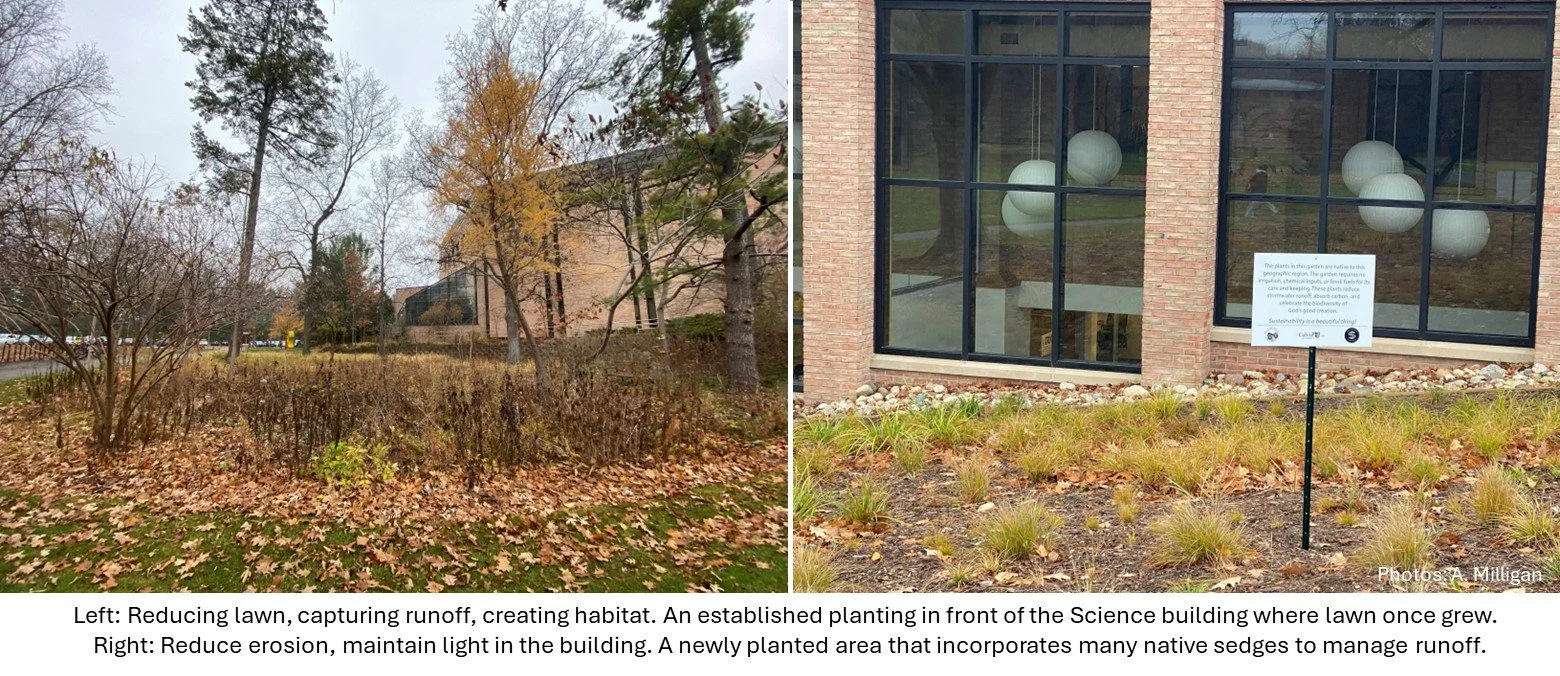
The PCS are all about research, teaching, engagement, and ecological restoration - sound familiar? The conversations they have with residents are the same ones WSA Stewards have with our residents – focused on education, habitat creation, and the role each person plays in protecting our natural resources. Like WSA, the stewards don’t just talk, they lead by example and they take bold action. As I walked the campus, I saw example after example of best-management-practices (bmp), the result of years of dedication and hard work by a team of people on a mission. It reminded me of the hundreds of projects WSA has implemented across our county since its inception. Interestingly, the first class of WSA Stewards graduated in 2009, the same year PCS began its work.

Like AA County Stewards, Plaster Creek Stewards also write grants, provide access to native plants (they have a native nursery on campus), and are innovative and tireless in the work they do to improve their watershed. I encourage you to look at the PCS website to learn more.

As winter’s cold is upon us, and our days grow shorter, it can be hard to stay positive. Like many of you, I find it hopeful and peaceful to visit natural places during these cold months. I find it uplifting to fill my days learning more about native plants and the many stewards who are making plans to plant more in 2026. I encourage you to reach out to others during this time, to make your own planting plans for the New Year and to be grateful and inspired by WSA and the Plaster Creek Stewards for the tremendous work they do to protect our environment.


(1) Plaster Creek gets its name from gypsum, a mineral used to make plaster. A plaster mill once stood along the river where gypsum was mined until the early 1900’s

Alison Milligan – MG/MN 2013
Watershed Steward Class 7/Anne Arundel Tree Trooper
Chesapeake Bay Landscape Professional (CBLP)
alison@lifewithnativeplants.org
Latin for Gardeners: December End of Year Quiz!

Latin for Gardeners
December’s Native Maryland Plant:
All of them!

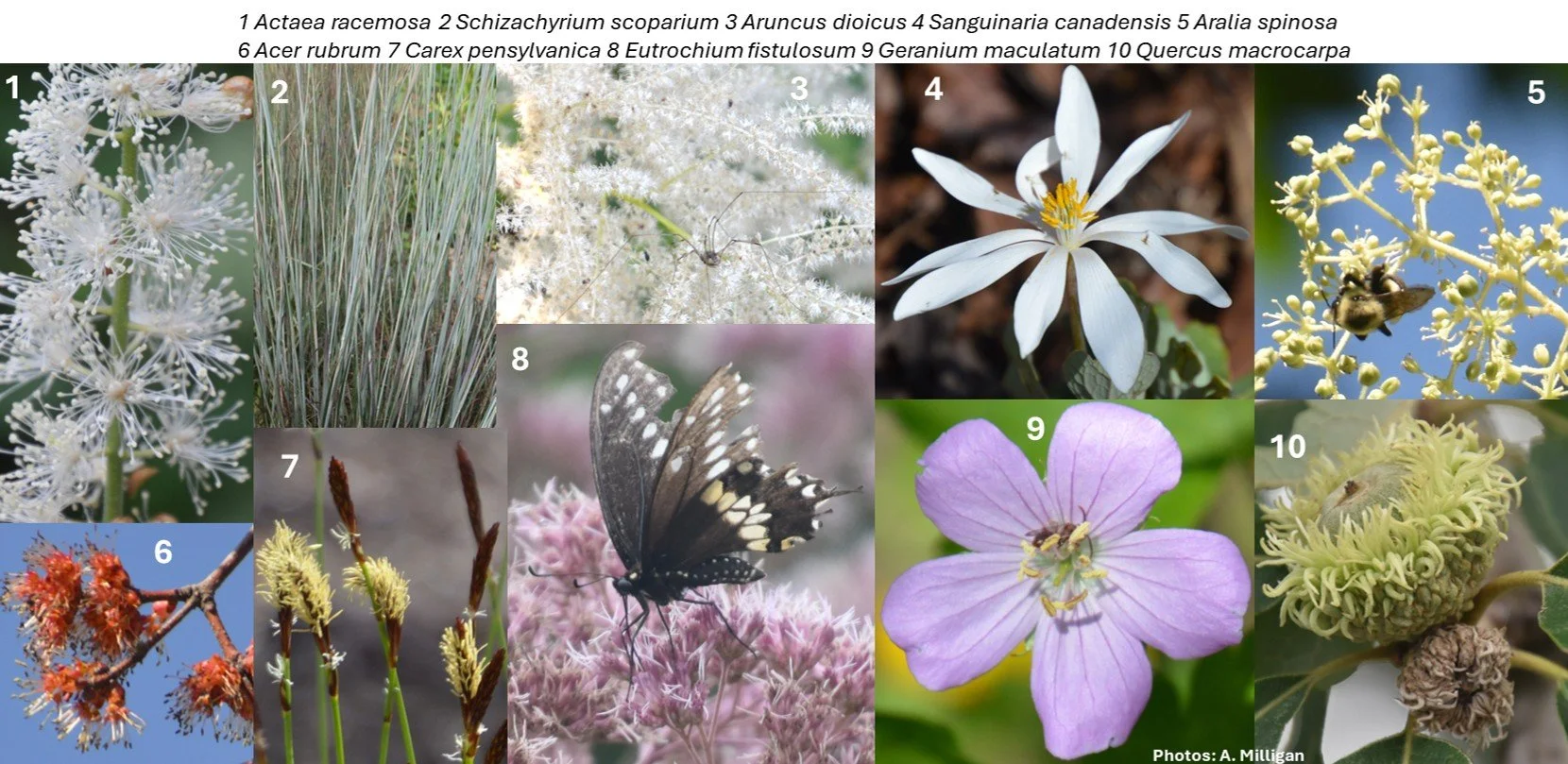
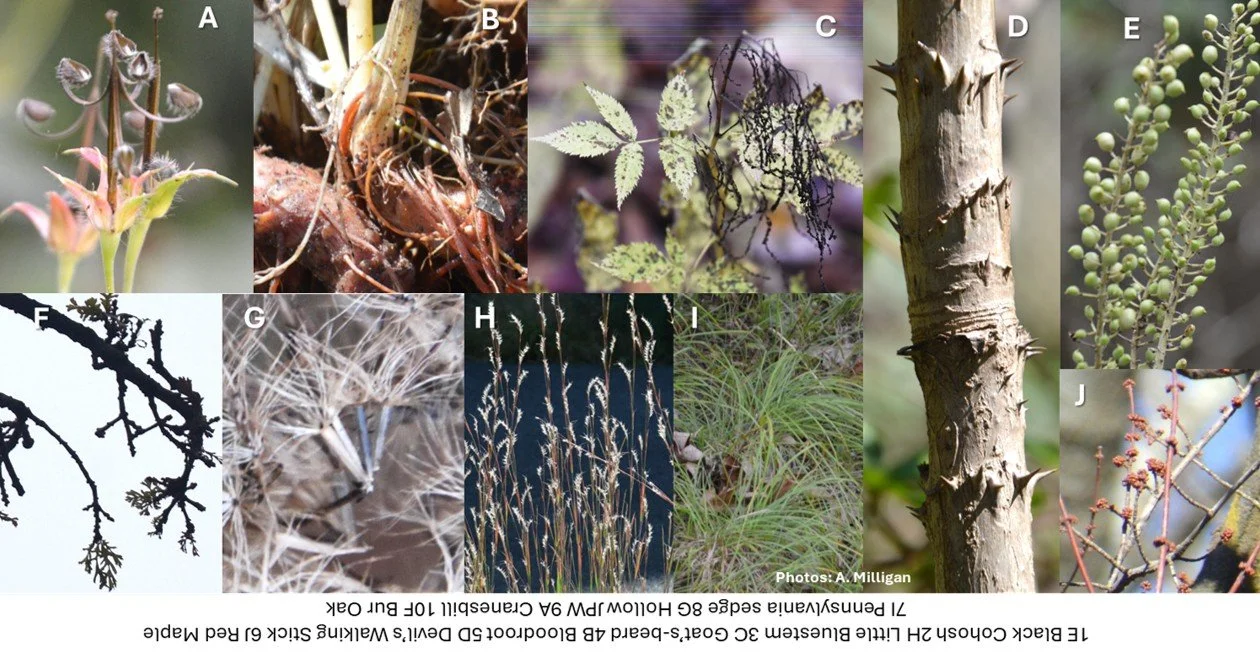
Hello Master Watershed Stewards, Naturalists and Gardeners! I hope you enjoyed planting many native plants this year: to manage stormwater runoff, support biodiversity and create a healthier environment for all of us. It’s time to test your knowledge of the botanical names of the plants that were featured in 2025’s ‘Latin for Gardeners’. It’s always best to use the Latin names of plants when you recommend them to friends and the public – there’s only one botanical name for a plant, so it avoids confusion and ensures people select the right plant when shopping at nurseries.

The first group of photos shows the plants in their bloom time with their botanical name listed. The second group shows them in in their winter dress. Do you still recognize them? Can you match the number of each plant in bloom to the letter of them in winter? Good luck, or as they say in Latin, “Fortuna!”


Alison Milligan – Master Gardener/Master Naturalist
Watershed Steward Class 7/Anne Arundel Tree Trooper
Chesapeake Bay Landscape Professional (CBLP)
alison@lifewithnativeplants.org

Latin for Gardeners: November 2025

Latin for Gardeners
Novembers’s Native Maryland Plant

Carex pensylvanica Lam.
(KAY-reks pen-sill-VAN-ee-ka)
Common Name: Pennsylvania Sedge

Carex pensylvanica is an upland sedge, semi-evergreen and a groundcover that is often used as a grass substitute in part-shade to full-shade areas. It tolerates moderate foot traffic and once established, it can easily be spread through division.

Ground cover sedges are beneficial for many reasons. They are generally cool-season plants, they emerge in early spring and help to suppress weeds. Some of them, like C. pensylvanica, are water-wise plants; they do well in dry shade, forming an attractive semi-evergreen layer when planted under shade-loving shrubs. Sedges are considered low-maintenance and another great benefit - deer tend to avoid them.

Carex pensylvanica is host to many moths and butterflies. Be sure to allow fallen leaves to stay on any sedges you plant. It will improve the soil, protect overwintering insects, and the plants will have no difficulty emerging in the spring.


Alison Milligan – MG/MN 2013
Watershed Steward Class 7/Anne Arundel Tree Trooper
Chesapeake Bay Landscape Professional (CBLP)
alison@lifewithnativeplants.org